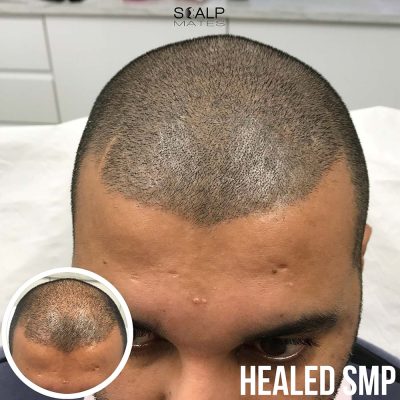
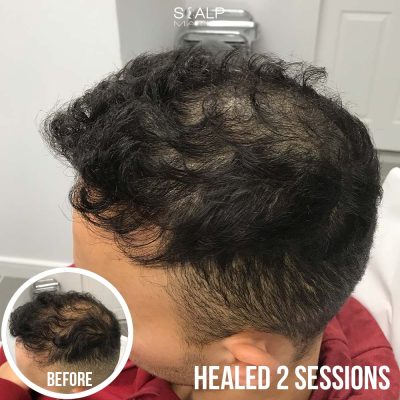
Explore Other Hair Loss Results
Buzz Cut Crown Density SMP for Late 20s Male (Realistic Progression) | Scalp Mates Birmingham
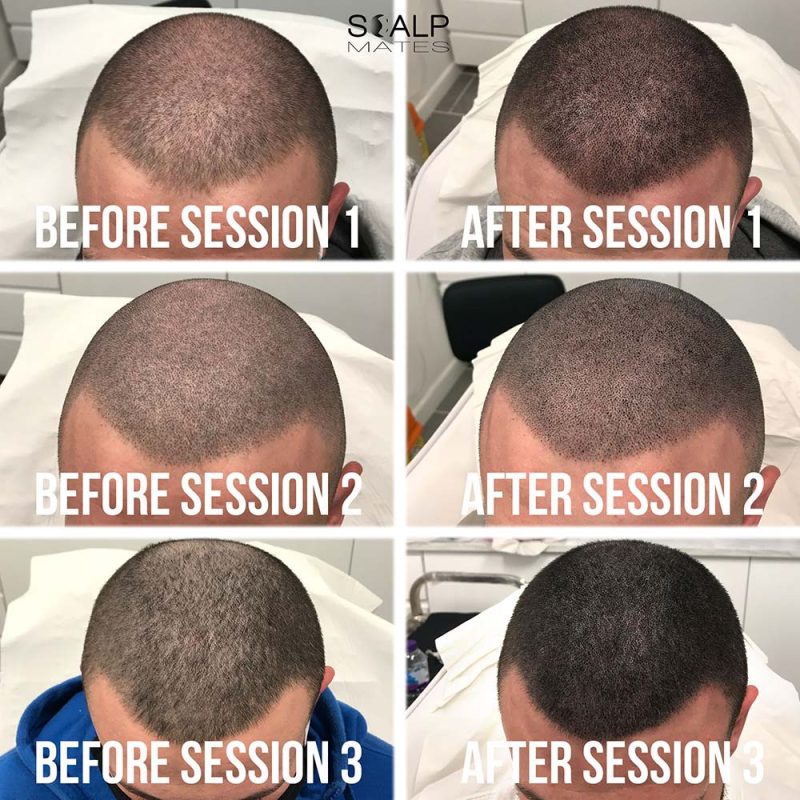
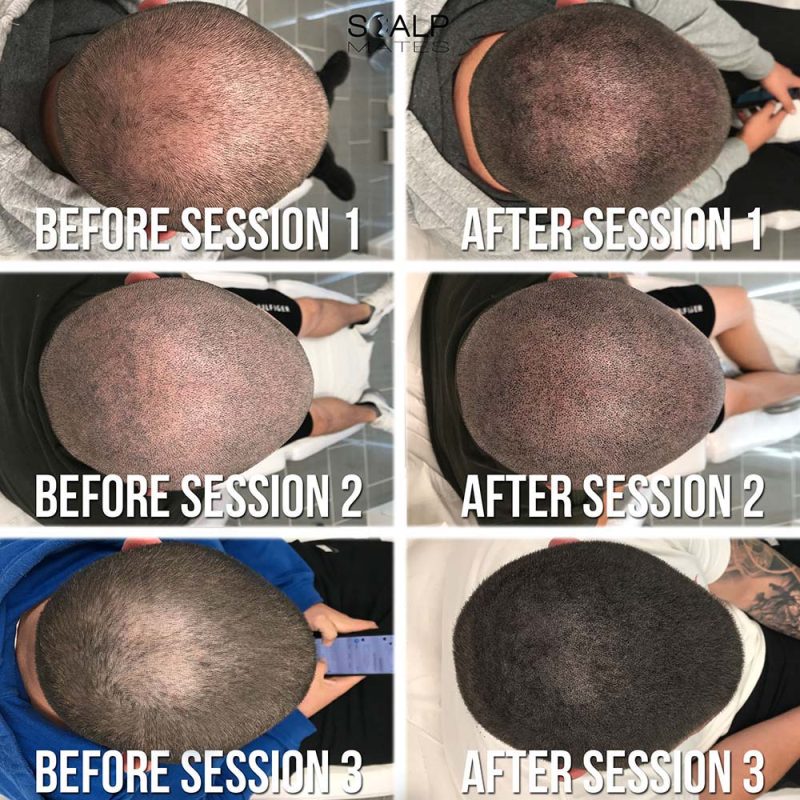
⚠️ Important Clinical Note: Post-Session Appearance & Washing
Immediately after a density session—especially on clients keeping a buzz cut or longer hair—the scalp may look extremely dark, or even heavily smudged.
Do not panic: This initial dark appearance is completely temporary. During treatment, excess surface pigment clings to the skin and smudges into existing hair shafts. Once you complete your initial post-session care and complete your first few gentle showers, all surface residue washes away. This reveals only the crisp micro-dots embedded in the dermis, leaving a much lighter, softer, and perfectly natural density match.
Managing Expectations: Realistic Crown Density for Buzz Cut Hair Lengths
When searching for a tattoo for thinning hair online, many marketing photos show dramatic, jet-black results under ideal studio lighting. At Scalp Mates, we believe in complete clinical transparency. While scalp micropigmentation is exceptionally effective at reducing scalp contrast, areas with severe hair loss—such as the vertex or crown—require an honest understanding of what cosmetic density replication can achieve when hair is worn longer than a shaved stubble.
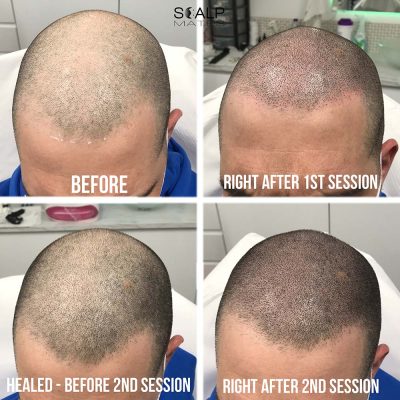
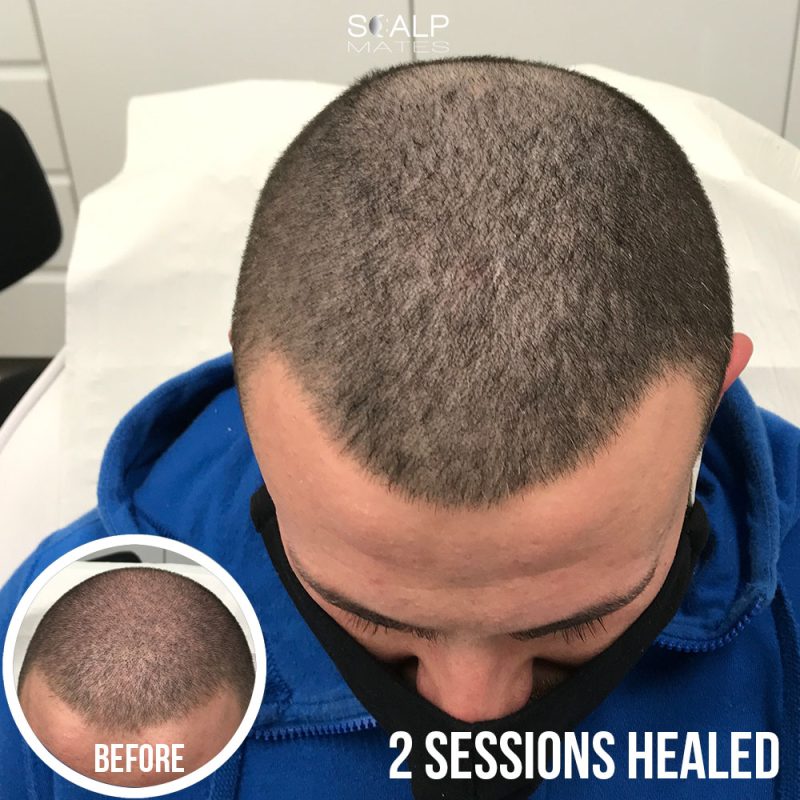
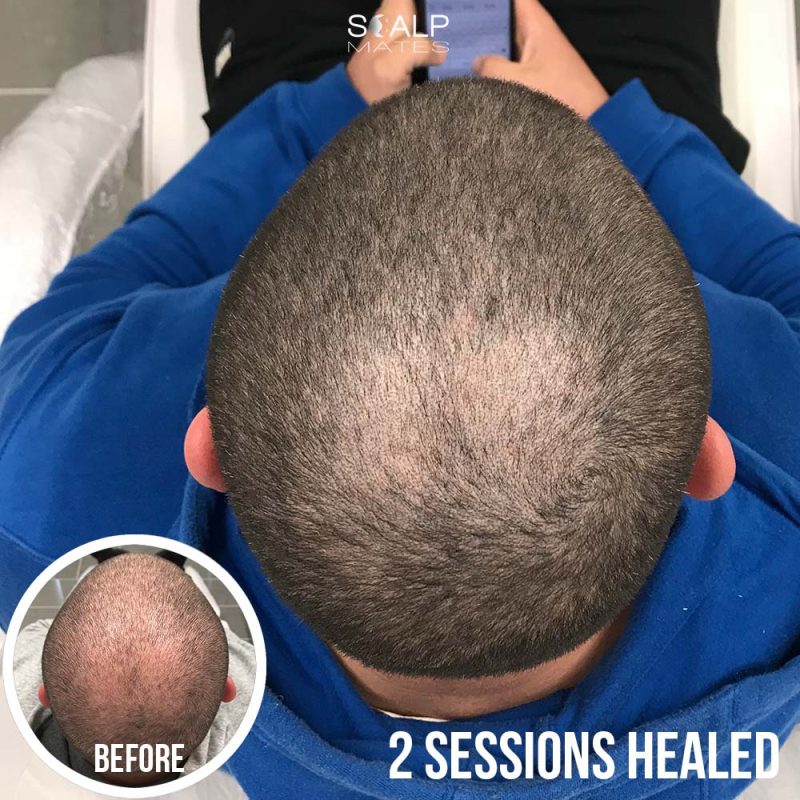
Featured in this case study is a late 20s male presenting with advanced diffuse hair loss concentrated heavily around the vertex, alongside moderate thinning through the frontal mid-scalp. During his 3-session treatment, the client allowed his hair to grow into a short buzz cut. As shown in his 2-session healed photos and session-by-session progression, the treatment delivered strong visual coverage across the hairline and top scalp, while significantly improving the thinned crown region.
—
Client Profile & Treatment Strategy
- Client Age & Demographic: Late 20s Male
- Hair Loss Type: Diffuse Thinning with Severe Crown/Vertex Thinning
- Hair Styling Choice: Short Buzz Cut (Grown slightly longer across sessions)
- Treatment Goal: Build maximum shade density beneath existing hair shafts without over-saturating the crown area.
- Clinical Reality: Realistic density improvement under direct overhead lighting while avoiding an artificial “blackout” effect.
—
Understanding Crown Thinning vs. Frontal Hairline SMP
Addressing a thinned vertex is one of the most challenging aspects of micropigmentation crown hair treatments. The hair whirl at the back of the head naturally parts in a spiral pattern, making the scalp underlying the crown the most exposed area under direct overhead light.
When executing scalp micropigmentation for crown balding on a buzz cut, two key factors come into play:
- Natural Hair Spacing: Where live hair is significantly sparser (such as the crown whorl), there are fewer physical hair shafts to cast natural 3D shadows. While scalp tattoo for thinning hair techniques insert dark micro-dots onto the skin, 2D pigment impressions cannot completely replace missing 3D hair shaft volume under harsh vertical lighting.
- Avoiding Over-Saturation: Over-depositing pigment in a desperate attempt to force an artificially dark crown creates an unblended, blotchy stain. Our goal is to build layered follicle impressions that blend softly into surrounding thicker areas while maintaining a natural, organic look.
Clinical Insight: Direct overhead camera angles represent the absolute toughest lighting condition for any hair restoration procedure. While the crown still appears slightly lighter from directly above, comparing his 2-session healed result to his baseline photo demonstrates a substantial reduction in exposed skin and a vastly fuller profile from all eye-level angles.
—
Progressive Session Breakdown: Navigating Changing Hair Lengths
Because the client grew his hair slightly longer between appointments, matching shade depth required precise adjustments across all 3 sessions:
Session 1: Base Layer & Spatial Mapping
We selected a lighter charcoal pigment to match his natural root tone, scattering initial micro-dots across the entire top scalp and thinned crown whorl to reduce bright skin reflection. Immediately after the appointment, surface pigment clung to his hair strands, making the scalp look unusually dark before his first post-treatment wash.
Session 2: Density Building & Vertex Focus
Approx Fourteen days later, Session 2 focused on tightening dot spacing. We placed micro-impressions closer together throughout the crown perimeter and frontal hairline zone to establish strong visual depth.
Session 3: Final Perfection & Seamless Blending
In the final session, we refined the entire scalp, ensuring the transition between his natural side hair and the treated crown blended smoothly. The resulting buzz cut hair tattoo provides an immediate visual upgrade, allowing him to wear his preferred hair length with renewed confidence.
—
Honest FAQs: What to Expect from Crown Density SMP
Why does my head look so dark or smudged right after a session?
During a density treatment on buzzed or longer hair, excess pigment sits on top of the skin and mixes with natural scalp oils and hair shafts. This makes the area look heavily shaded immediately post-session. Once you complete your initial healing period and wash your head over a few gentle showers, all excess surface ink rinses off, leaving behind only the clean, settled dots beneath the skin which settle much lighter and softer.
Can SMP make a severely thinned crown look 100% thick again?
Scalp micropigmentation creates a powerful illusion of hair density by removing the white scalp show-through beneath existing hair. While it dramatically improves the appearance of hair volume, it does not create 3D physical hair strands. Under bright overhead light, areas with significantly less real hair will still appear slightly softer than areas with dense natural growth.
Should I shave my head completely or keep a buzz cut for density SMP?
If you have reasonable hair distribution throughout, keeping a short buzz cut works very well. However, if crown thinning is severe, shaving the hair down to a 0.5 guard or wet shave often provides the most seamless blend between real hair roots and pigment micro-dots.
How many sessions are required for crown and thinning hair density?
Density builds require a minimum of 3 sessions spaced 10 to 14 days apart. Building density gradually prevents over-pigmentation and allows us to monitor how your skin retains the ink between appointments.
When executing scalp micropigmentation for crown balding on a buzz cut, two key factors come into play